
7 September 2026
The Al-Khatim Adlan Centre for Enlightenment and Human Development (KACE) is deeply concerned by investigations published by The New York Times and The Washington Post on 5 September 2026, which presented new and extensive evidence concerning allegations that the Sudanese Armed Forces developed, produced and used chlorine-based chemical weapons.
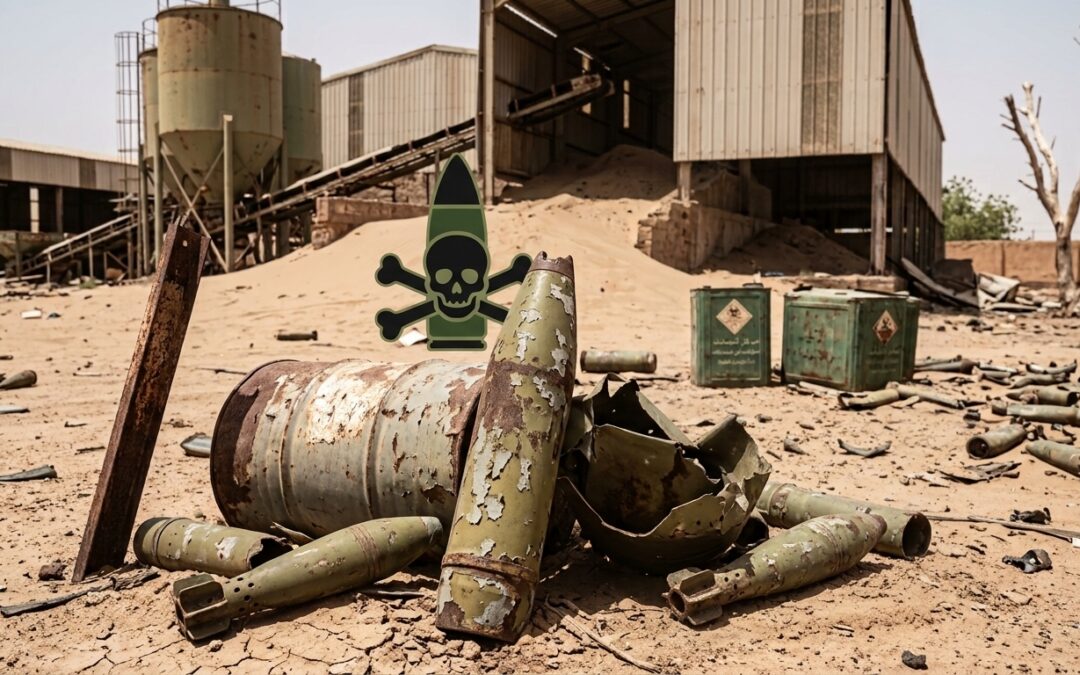
The New York Times reported that it had reviewed a dossier containing photographs, videos, military documents, voice messages and intercepted communications that appear to describe a secret programme established within the Sudanese military in 2024 to manufacture chlorine-based munitions for use against the Rapid Support Forces (RSF).
These reports represent an important development in the allegations that have surrounded the conflict for more than a year. They also follow the decision by the United States Government in 2025 concluding that the Government of Sudan had used chemical weapons in 2024, in violation of its obligations under the Chemical Weapons Convention, and the subsequent imposition of sanctions.
KACE stresses, however, that journalistic investigations and intelligence information—regardless of their level of detail or seriousness—must be followed by independent, impartial and internationally credible investigations capable of conclusively establishing the facts.
The allegations reported by The New York Times are extremely serious. They include claims concerning the design and testing of chemical munitions, the possible manufacture of hundreds of chlorine-based weapons, the alleged use of some of these weapons during military operations, and subsequent attempts to remove or conceal evidence relating to the programme.
Of particular concern are allegations that chlorine intended for civilian drinking-water treatment was diverted for military purposes. If substantiated, the diversion of materials intended for civilian or humanitarian use for the manufacture of prohibited weapons would constitute an extremely serious matter requiring a comprehensive investigation and accountability for those responsible.
The Sudanese Armed Forces have rejected these allegations. KACE believes that this denial, like the allegations themselves, should be subjected to rigorous and independent examination based on evidence.
Sudan has been a State Party to the Chemical Weapons Convention since 1999. The Convention is one of the most widely accepted international treaties, with 193 States having joined or ratified it, reflecting a broad international consensus rejecting chemical weapons and prohibiting their development, production, stockpiling and use under any circumstances.
Humanity recognized at an early stage the exceptional dangers posed by chemical weapons and their devastating effects on human beings, and sought to restrict and prohibit their use through international law. One of the most significant milestones in this process was the 1925 Geneva Protocol for the Prohibition of the Use in War of Asphyxiating, Poisonous or Other Gases, and of Bacteriological Methods of Warfare, signed in Geneva on 17 June 1925. The Protocol represented a fundamental step towards establishing the prohibition of the use of chemical weapons in armed conflict.
Accordingly, any use of chemical weapons in the ongoing conflict would not merely constitute a dangerous escalation in the means and methods of warfare; it would also raise extremely serious questions concerning violations of established international obligations requiring investigation and accountability.
KACE therefore calls upon the Organisation for the Prohibition of Chemical Weapons (OPCW) to act urgently and employ all appropriate mechanisms available under the Chemical Weapons Convention to establish the facts surrounding these allegations.
It should also be noted that this is not the first time allegations concerning the use of chemical weapons in Sudan have arisen. In 2016, Amnesty International published a report entitled Scorched Earth, Poisoned Air, in which it stated that it had gathered evidence indicating that Sudanese government forces had used chemical weapons during military operations in the Jebel Marra area of Darfur. The Sudanese Government denied those allegations at the time.
The recurrence of allegations of such gravity nearly a decade later reinforces the need for an independent and transparent international investigation based on scientific and field evidence. The relevant authorities, foremost among them the OPCW, should be provided access to relevant sites, witnesses, documents and samples so that the allegations can be substantiated or disproved and responsibility determined.
KACE also calls upon the Sudanese authorities and the Sudanese Armed Forces to grant the OPCW and other duly authorized international investigative bodies full, safe and unhindered access to suspected production and storage facilities, locations where alleged attacks took place, relevant military records, witnesses and all other potential evidence.
All alleged chemical weapons, production equipment, documents, environmental, biological and medical samples, medical records and any other potentially relevant evidence must be preserved. No individual, military body, government institution or other entity should destroy, conceal, manipulate, contaminate or remove any material that may be relevant to an international investigation.
KACE further calls upon the international community to ensure the protection of civilians who may have been exposed to toxic chemicals, support their access to appropriate medical examinations and treatment, provide independent mechanisms for documentation and environmental testing, and ensure the protection of survivors, witnesses and medical personnel.
At the same time, these allegations must not obscure the broader pattern of atrocities and serious violations committed during Sudan’s devastating war.
All parties to the conflict must be held accountable for violations of international humanitarian law and international human rights law. The Rapid Support Forces and allied forces have also been accused of committing extremely serious crimes against civilians, including mass killings, conflict-related sexual violence, forced displacement and other atrocities. Allegations against one party to the conflict must never be used to justify, minimize or obscure crimes committed by another.
The Sudanese people have the right to know the truth.
If the development or use of chemical weapons during this war is established, those responsible—regardless of their rank or affiliation—must be identified and held accountable through independent and credible legal proceedings.
Accountability for atrocities in Sudan cannot be selective. There must be truth, independent investigation and justice for all victims.
For Contact and Further Information
Al-Khatim Adlan Centre for Enlightenment and Human Development (KACE)
Email: info@kacesudan.org
Tel: +256 393 516 532
Address:
Ntinda II Road, Naguru
Kampala, Uganda
Website: www.kacesudan.org
/